The Business Lesson Most Entrepreneurs Learn Too Late
Every entrepreneur has faced this moment.
You explain your product, showcase its features, highlight its benefits, and confidently present your offer. Then the customer asks a simple question:
“How much does it cost?”
Many business owners immediately assume the deal is about to become a negotiation over price.
But here’s the truth:
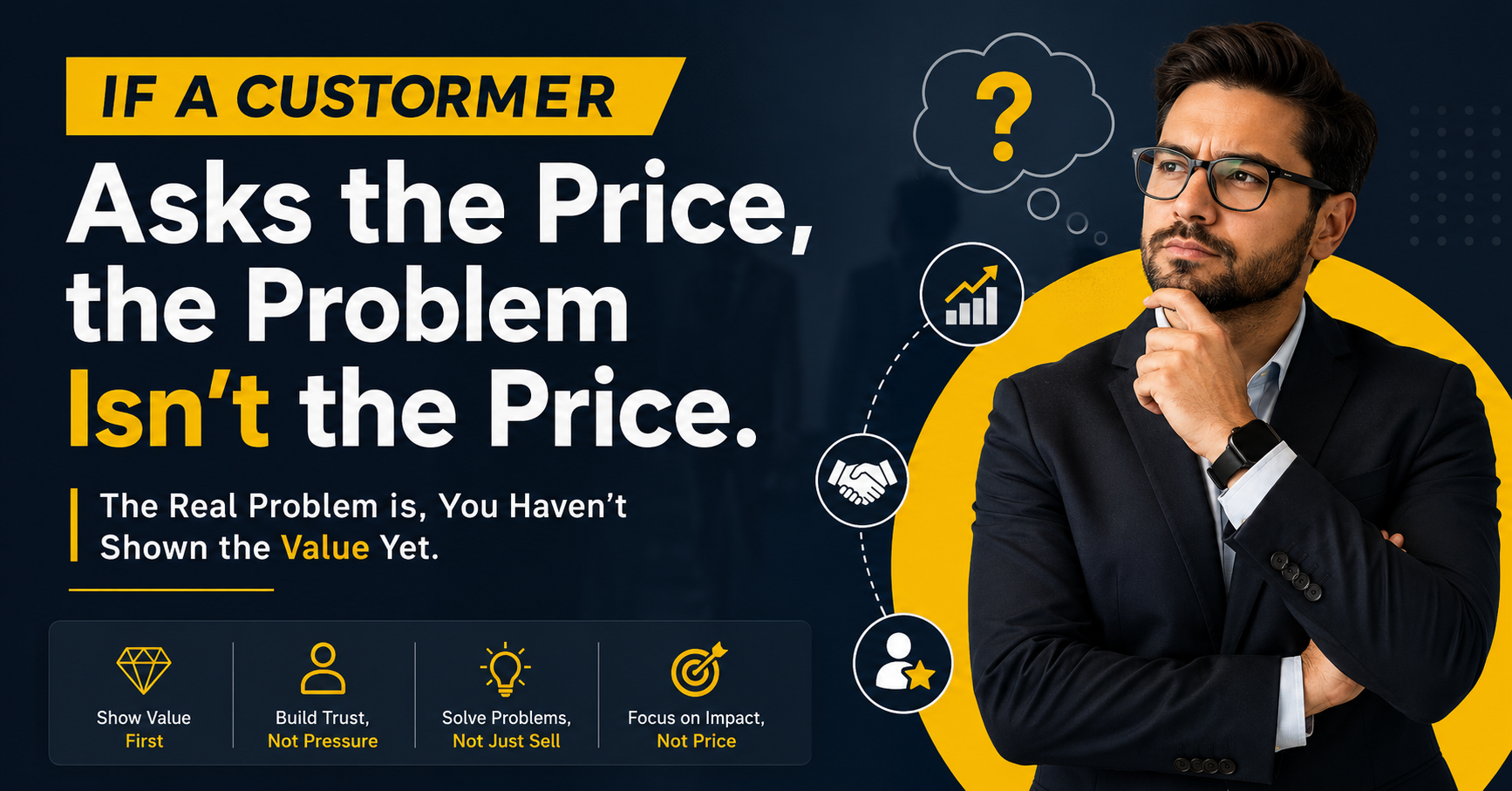
When a customer asks the price, the problem usually isn’t the price. The problem is value perception.
The most successful businesses in the world don’t win because they’re the cheapest. They win because customers clearly understand why they’re worth paying for.
And that lesson can completely transform the way you sell.
Why Customers Ask About Price
Most entrepreneurs misunderstand the psychology behind pricing.
Customers rarely ask for the price because they want the cheapest option.
They ask because they’re trying to answer a deeper question:
“Is this worth my money?”
Think about it.
People willingly spend thousands on smartphones, luxury cars, premium coffee, designer clothes, and exclusive memberships.
Why?
Because they believe the value exceeds the cost.
The same principle applies to every business, whether you’re selling services, products, software, consulting, or handmade goods.
If customers focus heavily on price, it’s often because they haven’t fully understood the value.
The Story of Two Business Owners
Imagine two business owners selling the exact same service.
Business Owner #1
When asked about pricing, they immediately respond:
“It’s ₹10,000.”
The customer compares the number with competitors and starts looking for cheaper alternatives.
Business Owner #2
Before discussing price, they explain:
- The problem they solve.
- The results customers achieve.
- The time and money saved.
- The long-term benefits.
Only then do they reveal the price.
Suddenly, ₹10,000 doesn’t feel like an expense.
It feels like an investment.
Same service.
Same price.
Completely different outcome.
The difference wasn’t the offer.
The difference was the perceived value.
People Buy Solutions, Not Products
Customers don’t buy drills because they want drills.
They buy drills because they want holes.
They don’t buy gym memberships because they want access to equipment.
They buy the possibility of becoming healthier, stronger, and more confident.
They don’t buy marketing services.
They buy growth.
They don’t buy software.
They buy efficiency.
They don’t buy coaching.
They buy transformation.
The moment your customer understands the result, price becomes less important.
The Most Expensive Mistake Small Businesses Make
Many entrepreneurs compete on price because they believe lower prices attract more customers.
Initially, it may work.
But over time, it creates three major problems:
1. Lower Profit Margins
You work harder but earn less.
2. Attracting the Wrong Customers
Price-sensitive customers often switch to competitors the moment they find something cheaper.
3. Damaging Brand Value
When your only advantage is being cheaper, customers assume you’re also lower quality.
This creates a dangerous cycle that’s difficult to escape.
How Great Brands Handle Price Objections
The world’s strongest brands rarely justify their prices.
Instead, they strengthen their value.
They focus on:
- Trust
- Quality
- Results
- Experience
- Reliability
- Reputation
Customers don’t pay premium prices because they enjoy spending more.
They pay because they believe they’re receiving more.
That belief changes everything.
The Real Question Behind Every Price Inquiry
When a customer asks:
“Why is it so expensive?”
What they’re often asking is:
- What makes it different?
- What results will I get?
- Why should I choose you?
- What happens if I don’t buy?
The businesses that answer these questions effectively rarely need to lower their prices.
Shift the Conversation from Cost to Value
Instead of defending your price, explain:
The Problem
What challenge does your customer face?
The Solution
How does your product or service solve it?
The Outcome
What measurable result can they expect?
The Cost of Doing Nothing
What happens if they delay the decision?
When customers see the bigger picture, the conversation naturally moves away from price.
A Powerful Business Mindset
Successful entrepreneurs understand one simple principle:
Cheap products attract comparisons. Valuable products attract decisions.
When your offer clearly solves a meaningful problem, customers stop asking whether it’s cheap.
They start asking whether they can afford to miss the opportunity.
That’s a completely different conversation.
And it’s where great businesses thrive.
Final Thoughts
The next time a customer asks for the price, don’t panic.
Don’t rush to offer discounts.
Don’t assume the deal is lost.
Instead, remember this:
Price is rarely the real objection.
Most customers simply want confidence that they’re making the right decision.
When you communicate value, build trust, and clearly demonstrate results, price becomes a secondary factor.
Because in business, people don’t pay for products.
They pay for outcomes.
And the businesses that understand this principle are the ones that grow, scale, and lead their industries.
Key Takeaway
If a customer asks the price, the problem isn’t the price. The problem is that the value hasn’t been fully communicated yet.