

Introduction
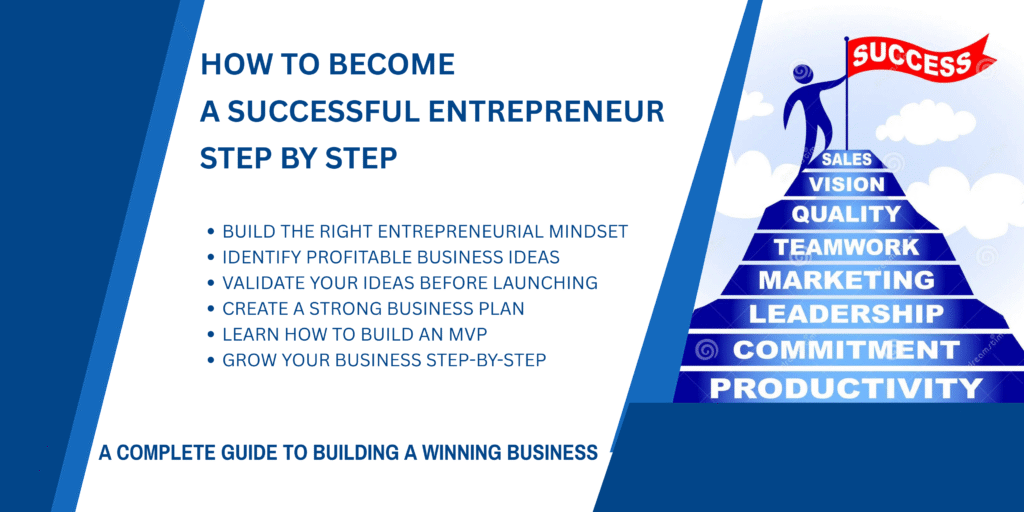
How to a be a successful entrepreneur? this question often haunts many entrepreneur. It takes vision, commitment and a solid plan to become a successful entrepreneur. While the journey might be tough, taking it one step at a time can greatly boost your chances of success.

Step 1: Find Your Passion, Goal and Purpose
Determine what you are genuinely passionate about. This is what will drive your passion, even through the tough moments. Ask yourself: What problem do I want to solve? What industry interests me?
Step 2: Find a Market Need
Successful businesses fix every problems. Conduct market research to find gaps, pain points, or unmet needs in an industry. Conduct interviews, and competitive analysis and Some field work too.
Step 3: Develop a Business Idea
Once you’ve spotted a problem, craft a business idea that offers a unique solution. Think creatively and find ways to stand out from existing competitors. Make sure your idea is innovative, practical, and long-lasting.
Step 4: Create a Business Plan
A solid business plan is your roadmap to success. It outlines your goals, strategies, financial projections, and marketing plans. Include sections like: Market Analysis, Product/Service Description, Revenue Model etc..
Step 5: Build the Right Skills
Entrepreneurship requires a broad skill to build there idea into global business. Recognize your flaws and strive to enhance them. Look into online classes, mentor programs, or business seminars.
Step 6: Get Funding
Most companies require starting capital. Explore funding options such as: Personal savings, Loans, Angel investors etc…
Create a pitch to convince people to funding you
Step 7: Begin Small and Pilot
Test your product or service first on a small scale before you go big. This way, you can validate your idea and make the required adjustments. Release MVP or pilot edition.
Step 8: Register Your Business
Get official. Select a business type (sole proprietorship, partnership, LLC, etc.) and officially register your company. Don’t overlook taxes and licenses. Consult with an attorney or financial advisor if necessary.
Step 9: Establish a Strong Brand
Your brand is not just a logo. It’s your history, purpose, and the way you relate to your people. Develop a brand identity: name, logo, tagline, website, and social media presence.
Step 10: Market Your Business
Use digital and traditional marketing strategies to attract customers. Leverage SEO, social media, content marketing, email marketing, and networking. Know your target audience and tailor your messaging accordingly.
Step 11: Emphasis on Customer Experience
Satisfied customers are repeat customers and word-of-mouth ambassadors. Provide value, listen, and focus on exceptional service. Establish loyalty via trust and reliability.
Step 12: Track, Learn, and Evolve
Running a business is a continuous learning process. Track your performance, track important metrics, and be prepared to evolve. Remain flexible and adaptable to change.
Conclusion
Nothing is achieved overnight. Entrepreneurship is a continuous learning experience of growth, development, and adaptation.